Finding the top mobile app development frameworks 2026 has to offer is the first step toward building a product that scales. A strategically well-designed mobile app is a crucial part of your brand identity. Choosing the right mobile app development frameworks reinforces brand recognition and creates a seamless user experience across all touchpoints. However, building a mobile app from scratch that ensures efficacy, agility, and adaptability is where the real challenge begins. By leveraging the right mobile app development framework, you can turn your vision into reality in terms of both looks and performance.
The mobile app development landscape has shifted significantly. New frameworks have matured, old ones have been deprecated, and the bar for performance and user experience has moved. Here's what you need to know going into 2026.
What is a Mobile App Development Framework?
Before diving into specifics and the classic native vs cross-platform app development debate, let's understand what a mobile app development framework is. Simply put, it's a collection of tools, libraries, and best practices that streamline app development. By providing a structured environment, frameworks empower developers to build apps efficiently, saving time and resources.
Types Of Mobile App Frameworks:

Native Frameworks: Tailored to a specific platform: iOS or Android. They offer unparalleled performance and full access to platform-specific features. The trade-off: separate codebases for each platform, which takes more time and budget.
Cross-Platform Frameworks: These cross-platform app development frameworks allow developers to write code once and deploy it across multiple platforms.
Hybrid Frameworks: Combine web technologies with native wrappers. Fast to build and deploy, ideal for lighter applications, though they may not match native performance for complex use cases.
When choosing a framework, it's crucial to work with the market-leading option that offers seamless upgrades, smooth performance, and a robust ecosystem. Here are the frameworks dominating 2026.
Best Mobile App Development Frameworks In 2026:
1. Flutter

Developed by Google, Flutter is one of the most dominant cross-platform frameworks in 2026. It uses the Dart programming language and allows developers to build natively compiled apps for mobile, web, and desktop from a single codebase. Flutter's custom rendering engine, Impeller, is now the default on both iOS and Android, delivering smooth, pixel-perfect UIs that look and feel native on every platform.
In 2026, Flutter has approximately 46% adoption among mobile developers across cross-platform frameworks. It's the go-to for teams building visually rich, high-performance consumer apps.
Merits:
- Near native performance
- Expressive UI
- Hot reload for instant updates
- Single codebase for mobile, web, and desktop
- Strong Google backing
Demerits:
- Dart has a smaller talent pool than JavaScript
- App sizes tend to be larger than native alternatives
- Flutter is no longer the challenger. In 2026, it’s the benchmark.
2. React Native

Created by Meta, React Native allows developers to build cross-platform apps using JavaScript and React, the same language millions of web developers already know. In 2026, its new architecture is the standard, delivering significant performance improvements through direct JavaScript-to-native communication and eliminating the older bridge bottleneck.
React Native powers production apps at Meta, Microsoft, Shopify, and Discord. For teams with existing React expertise, it remains the fastest path from web to mobile.
Merits:
- Massive JavaScript ecosystem
- Reusable components
- Near-native performance with New Architecture
- Extensive community support
- Strong hiring pool
Demerits:
- Complex native integrations can require platform-specific code
- Occasional compatibility issues with third-party libraries.
3. Ionic
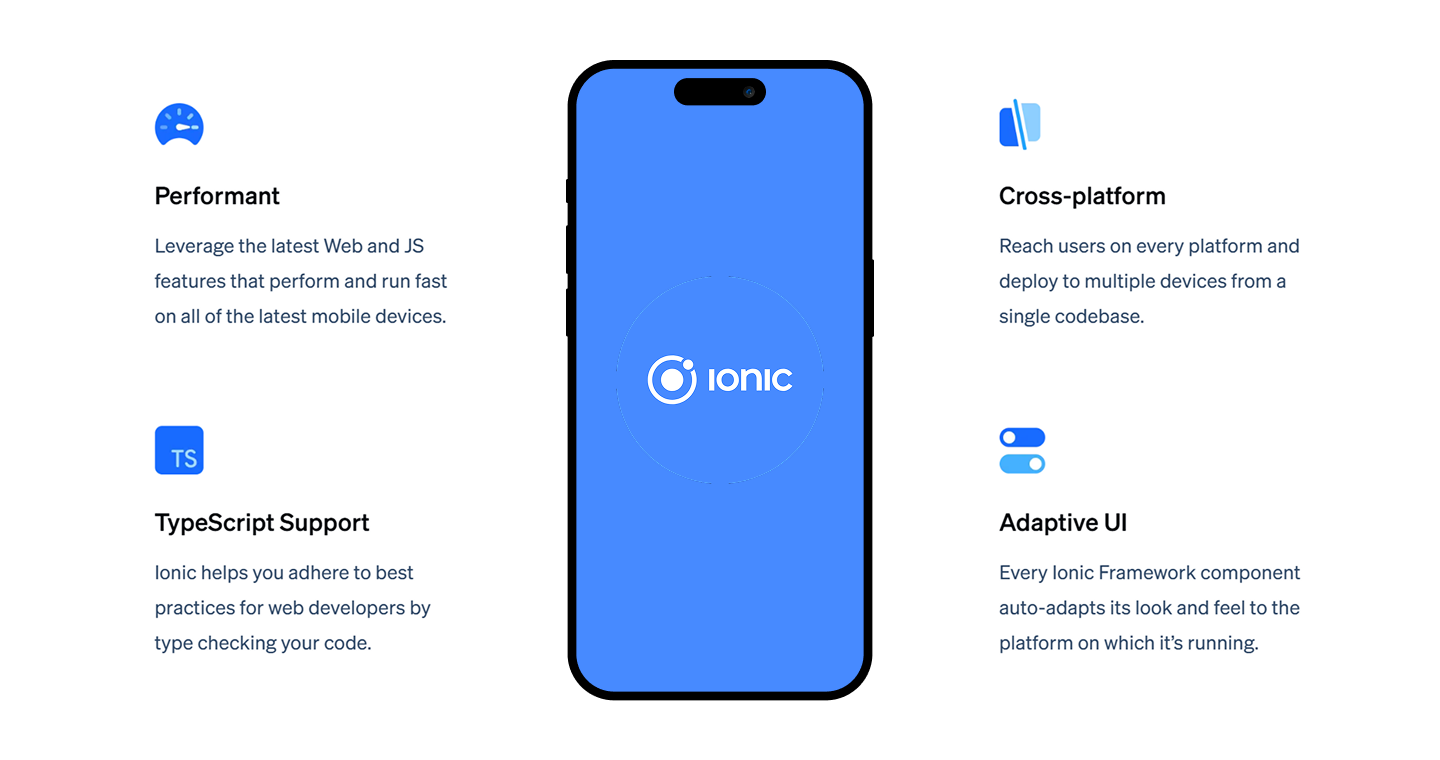
Ionic is an open-source framework for building cross-platform mobile apps using web technologies like HTML, CSS, and JavaScript. It supports Angular, React, and Vue, making it the most accessible option for web developers taking their first step into mobile development. Capacitor, Ionic's native runtime, bridges the gap between web code and native platform features.
In 2026, Ionic remains relevant for teams building lightweight apps, enterprise dashboards, internal tools, and Progressive Web Apps. It's not the right choice for heavy native integrations or graphics-intensive applications, but for the right use case, it's the fastest way to ship.
Merits:
- Rapid development
- Seamless integration with web technologies
- Extensive plugin ecosystem
- Works across iOS, Android, and web.
Demerits:
- Performance limitations compared to native frameworks
- Relies on web views for certain features
- Not suited for complex native integrations
- Ionic won't win a performance benchmark, but for the right project, it ships faster than anything else on this list.
4. Kotlin Multiplatform (KMP)
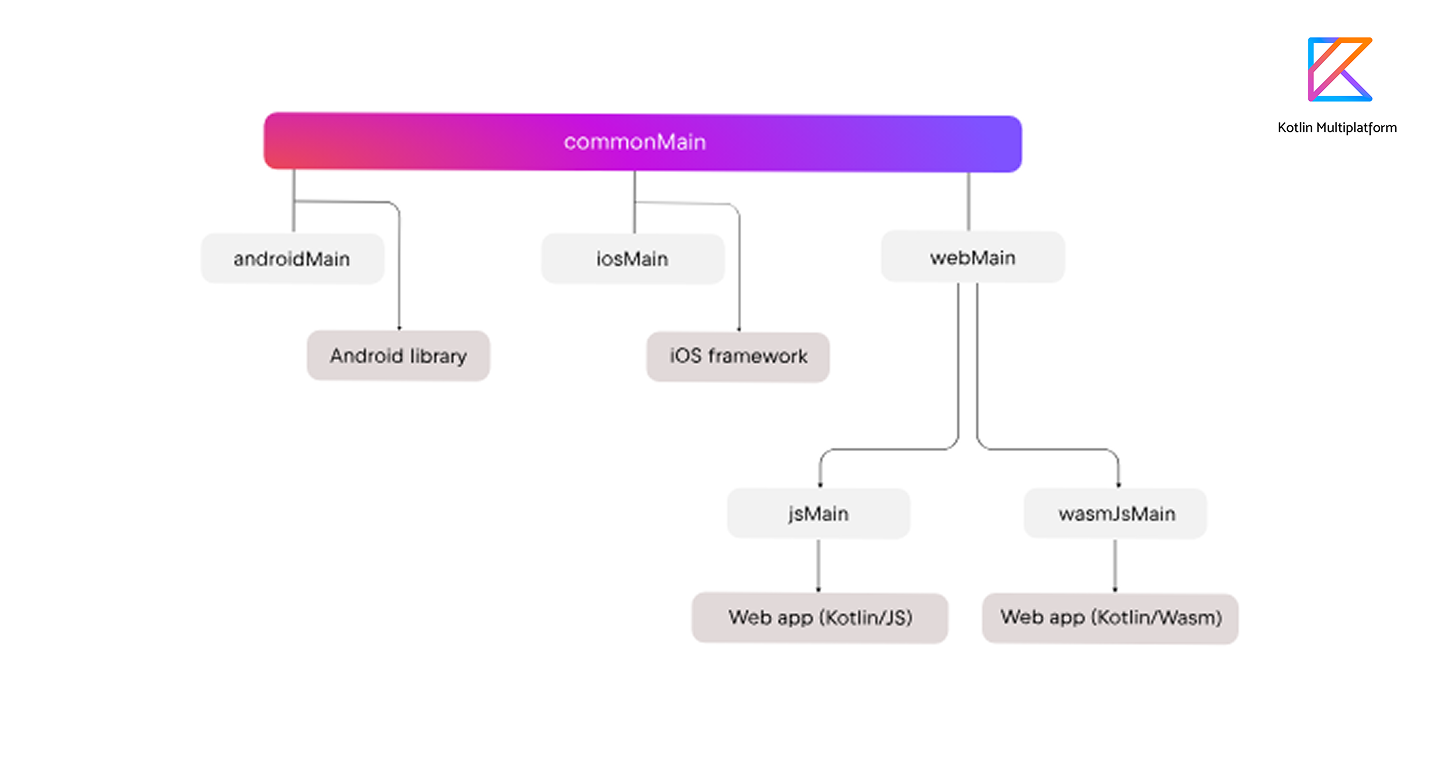
Kotlin Multiplatform is one of the most significant stories in mobile development in 2026. Developed by JetBrains and backed by Google, KMP takes a different approach to the cross-platform problem. Instead of sharing UI, it shares business logic, networking, and data layers across platforms while letting each platform handle its own UI natively.
The result: native UI that looks and feels exactly right on iOS and Android, with shared logic that doesn't need to be written twice. Compose Multiplatform for iOS is now stable, and the ecosystem is maturing fast. Netflix, Duolingo, McDonald's, and Forbes all use KMP in production. When comparing Kotlin Multiplatform vs Flutter, the key difference is philosophy. KMP shares logic while keeping native UI, whereas Flutter shares both logic and UI through its own rendering engine.
Merits:
- True native performance
- Shared business logic across platforms
- Integrates cleanly with SwiftUI on iOS and Jetpack Compose on Android
- Strong enterprise adoption
Demerits:
- Still maturing compared to Flutter and React Native
- Requires platform-specific UI development
- Steeper learning curve for teams new to Kotlin.
5. SwiftUI
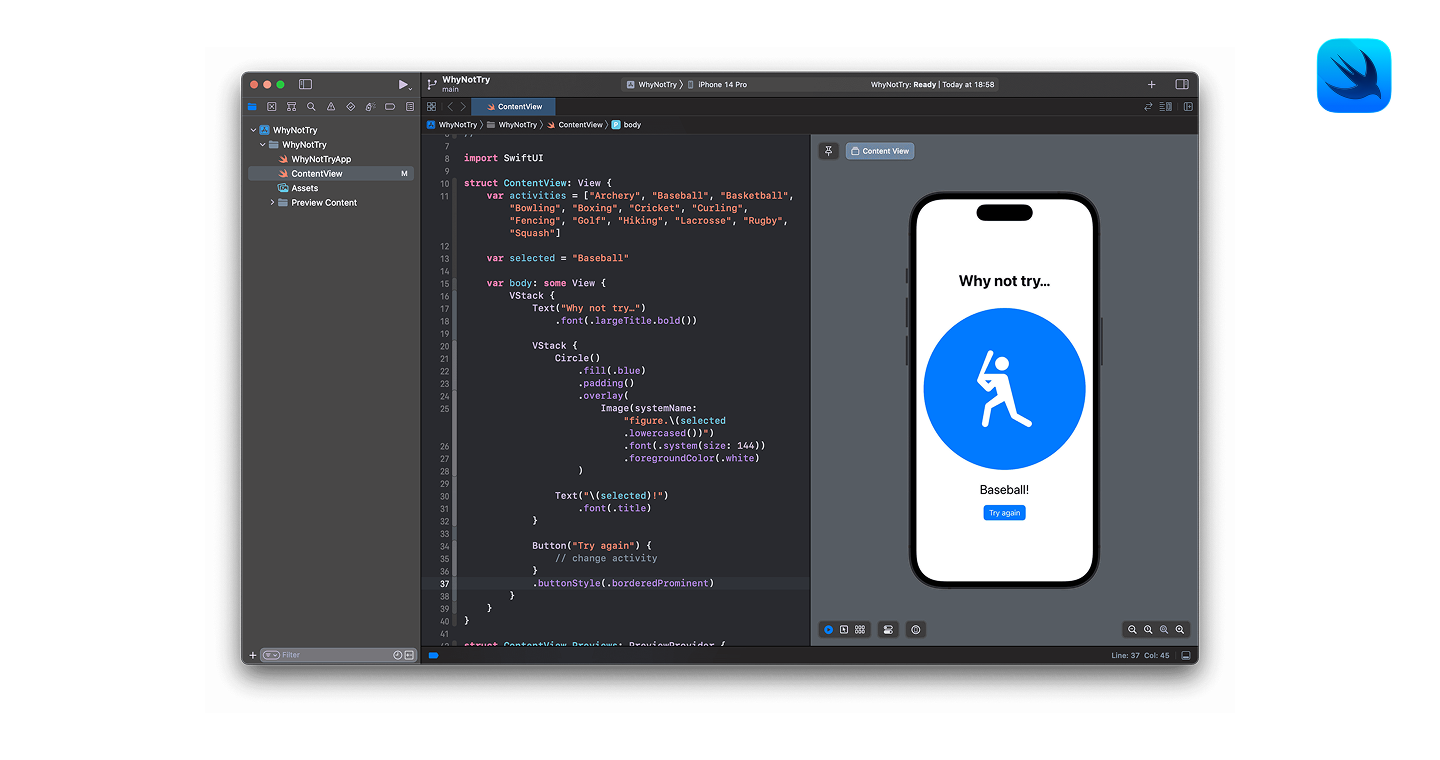
SwiftUI is Apple's native UI framework for building apps across iOS, iPadOS, macOS, watchOS, and tvOS. Released in 2019, it has matured considerably. In 2026, it covers the vast majority of use cases natively and is the standard approach for modern iOS development.
If you're searching for the best framework for iOS app development and building for Apple platforms only, SwiftUI delivers the best possible experience. It integrates deeply with Apple-specific technologies like HealthKit, ARKit, Core ML, and visionOS for spatial computing. Apple Music, Apple Fitness+, Airbnb, and GitHub Mobile are built with SwiftUI.
Merits:
- Best-in-class integration with Apple APIs, declarative UI
- Excellent performance and accessibility on Apple platforms
- Future-ready for visionOS and spatial computing.
Demerits:
- Apple ecosystem only, no Android support
- Requires dedicated iOS expertise, and older iOS versions have framework limitations
- For iOS-first products
Choose the framework that fits your vision!
Among the biggest mobile app development trends 2026 is this shift: the market is growing at a compound annual rate of 16.8% through 2032. Businesses that move fast with the right infrastructure win. Those who don't spend years paying down technical debt.
The right framework depends on your team, your product, and your users, and not on what's trending. Flutter and React Native lead for cross-platform. KMP is the enterprise-grade choice for native fidelity with shared logic. SwiftUI is the answer for Apple-first products. Ionic is the fastest path for web teams building lighter applications.
The mobile app development landscape is constantly evolving, and UPDOT® is here to help you navigate it. If you’re ready to build an app that performs, scales, and delivers results, get in touch with us. We’ll look at what you’re working with and help you find the right framework for your team.