
Introduction
A Headless CMS is how brands keep their content consistent across every channel, including website, application, email, and beyond, without making their teams work twice as hard. If you’re managing content across more than two platforms and still doing it manually, this is worth understanding. You can also read our Headless CMS vs Traditional CMS breakdown to see the full picture.
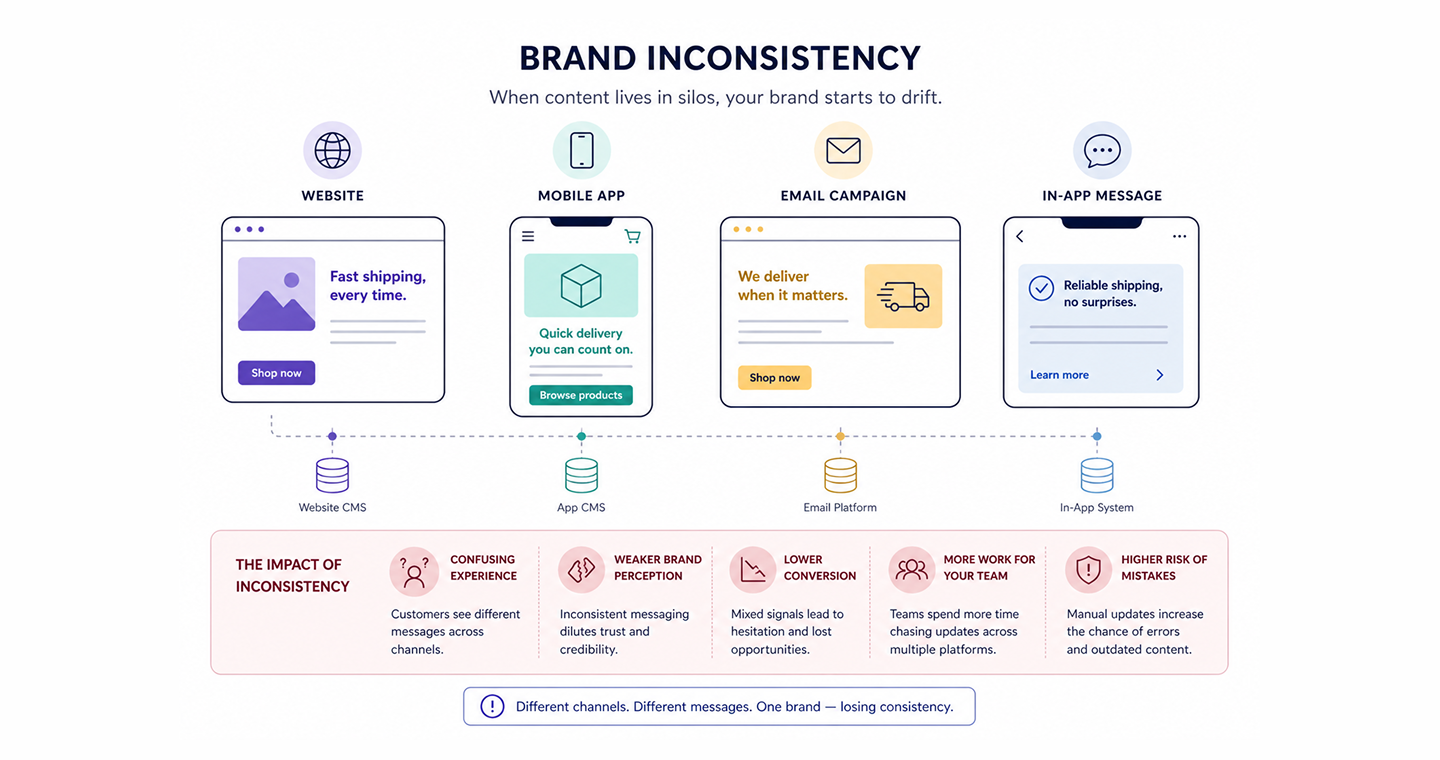
Here’s the situation most growing brands find themselves in: the website says one thing, the email campaign says something slightly different, and the application hasn’t been updated in three weeks. Nobody made a bad decision. The tools weren’t talking to each other.
The gap between what your brand should say and what actually gets published is a systems problem. And a Headless CMS is built to close it, and here’s how.
Why Brand Consistency Breaks Down
The short answer: too many teams, too many tools, no single source of truth.
Marketing updates the website. A different team manages the application. Email runs on its own platform. Each channel gets updated on its own schedule, by its own people, with its own messaging. Over time, the tone drifts, the details don’t match, and the brand starts to feel like it’s being run by four different companies.
Traditional CMS platforms make this structural problem worse. When content is tied to a specific layout or template, any update that needs to go out across channels has to be done manually, platform by platform. That’s where mistakes happen and where brand consistency quietly falls apart.
What Is a Headless CMS?
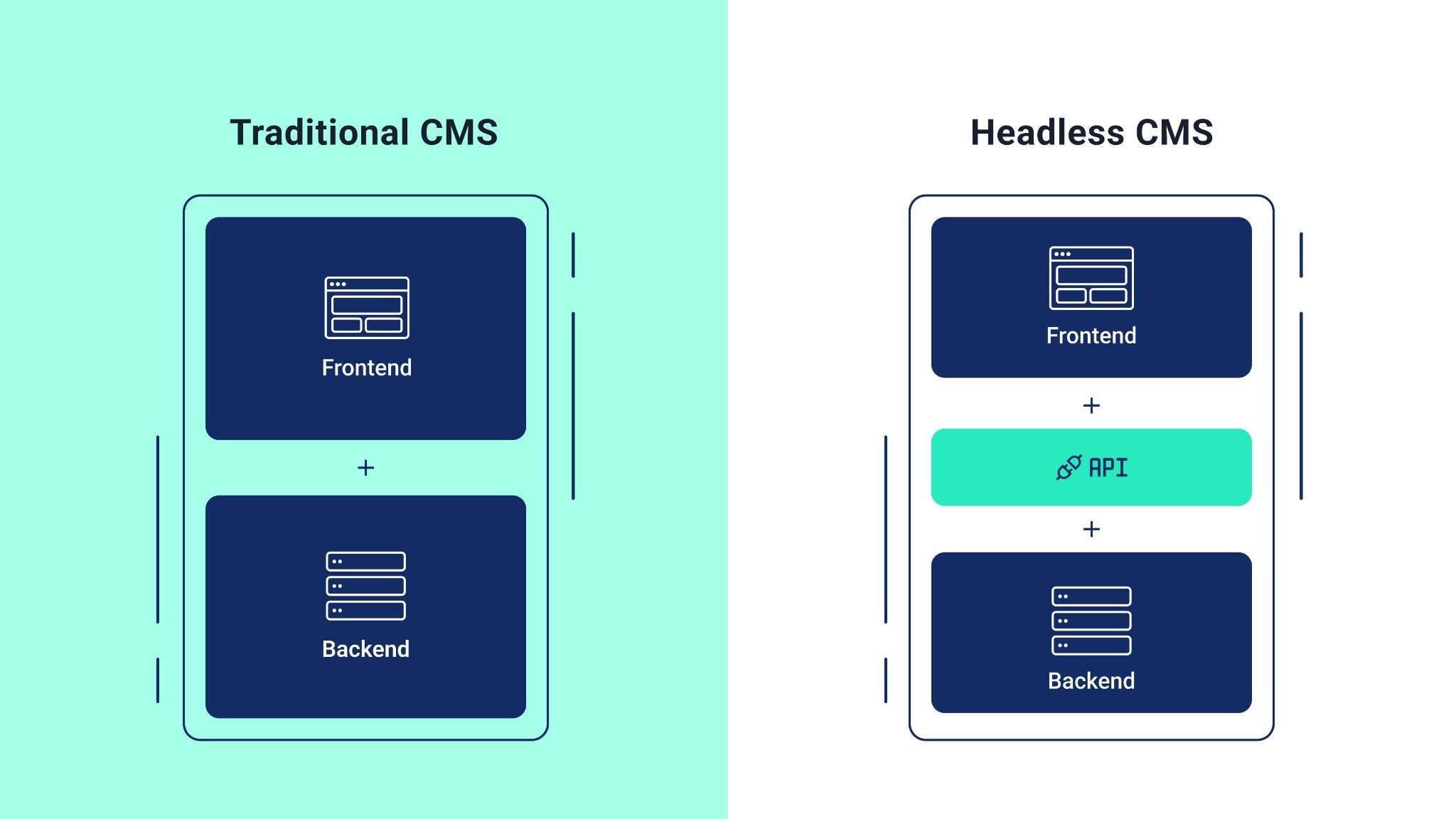
A Headless CMS separates where your content lives from where it's displayed. Instead of content being locked into a single website or template, it's stored in a central backend and delivered through APIs, REST, or GraphQL, to any platform like your website, mobile application, email system, or digital displays.
Your team edits in one place. Every channel reflects it. That’s the shift.
No more publishing the same update five times across five platforms. No more worrying about whether the application caught the latest version. The content infrastructure does that work so your team doesn’t have to.
Four Ways a Headless CMS Keeps Your Brand Aligned
1. One Source of Truth
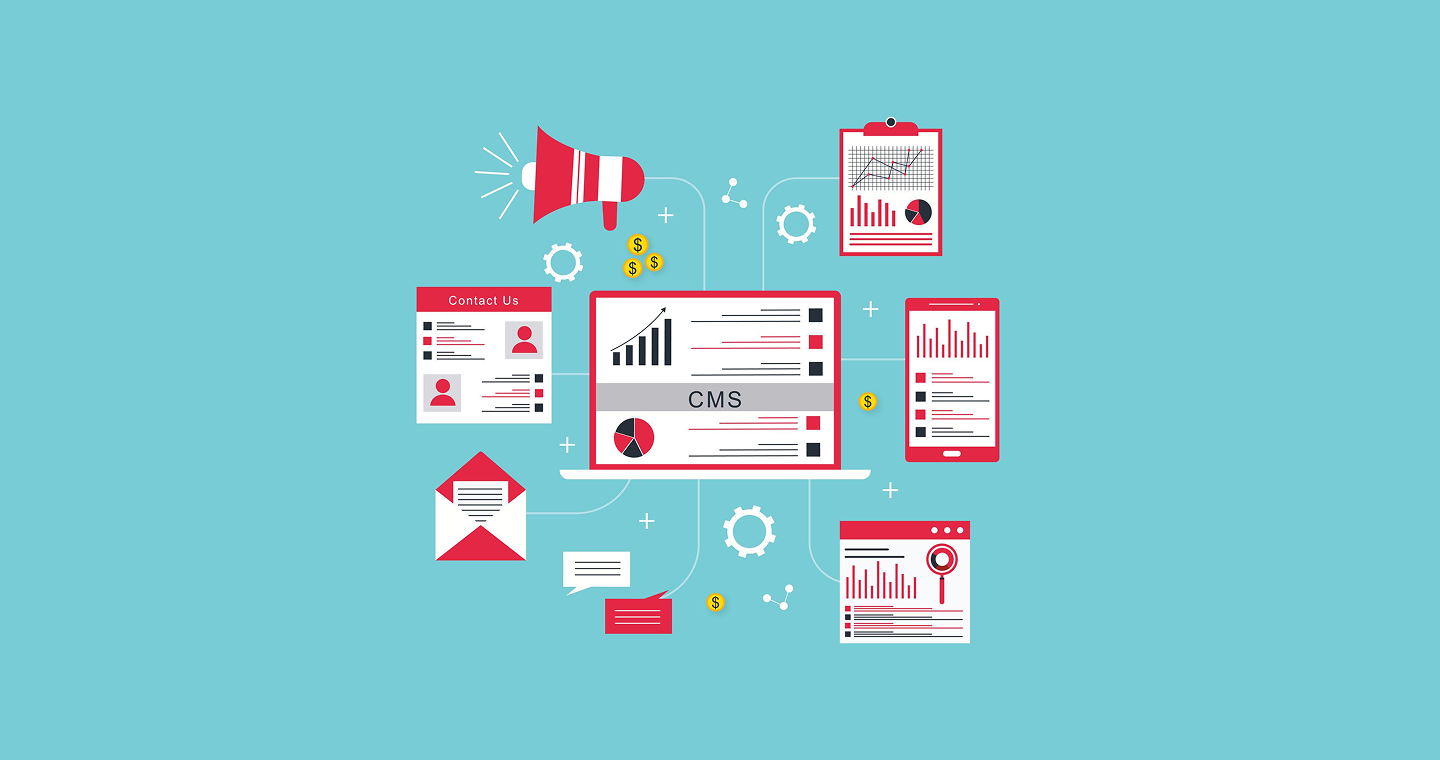
Every platform, web, mobile, and email pulls from the same backend. When the message is the same everywhere, brand perception stays consistent without extra effort.
2. Real-Time Sync Across Channels
Update content once, and it reflects everywhere instantly. No more chasing down outdated copy or coordinating manual changes across five different platforms. Webhooks handle cache clears and rebuilds automatically. Changes appear in minutes, not days.
3. Structured Content Keeps Tone Consistent
Content is built in reusable structured content components with defined guidelines. Whether it's a product description or a campaign banner, it follows the same content model every time. It also supports localization. Regional teams can add market-specific variants without anyone having to rebuild from scratch.
4. Governance Built In
Role-based access and approval workflows mean only validated, on-brand content goes live. It adds discipline without slowing your team down. For marketing teams and digital agencies managing multiple brands, this kind of content governance is what makes a scalable setup possible.
Why It Matters for E-Commerce in Particular
For e-commerce brands, a Headless CMS solves a problem that traditional platforms create by design: the storefront and the content are locked together. Want to update a product description or swap a campaign banner? You’re waiting on a developer and a deployment window.
Going headless decouples the two. Your content team can update, copy, swap visuals, and roll out promotions independently, without touching the codebase, without a deployment, and without taking anything offline. Faster execution, fewer dependencies, and this is an experience that stays current across web and mobile.
The Platforms We Use at UPDOT
Our primary platform of choice is Payload CMS, a code-first headless CMS that gives teams complete ownership of their content layer with no vendor lock-in. It’s what we recommend for most brands we work with because it scales clearly and integrates without friction.
For brands that need a self-hosted, open-source setup with full API control, we work with Strapi. It’s highly customizable and works well for teams with strong development capacity.
When the priority is real-time collaboration and high-volume, structured content, particularly across multiple markets, Sanity is a strong fit. It’s built for teams managing large content operations and gives editors a genuinely flexible workspace.
For enterprise teams that need a wide integration ecosystem and established enterprise support, Contentful remains a reliable option.
The right platform depends on your team, your content volume, and how much you want to own the infrastructure. That’s the conversation we have with every brand before recommending anything.
Closing Thoughts
Brand consistency isn't a creative problem. It’s an infrastructure problem. And once the right system is in place, keeping your brand aligned across every channel stops being something your team has to work at. It just happens.
If you’re ready to move away from the manual back-and-forth and build a content setup that actually scales, get in touch with us. We’ll look at what you’re working with and help you find the right headless setup for your team.